
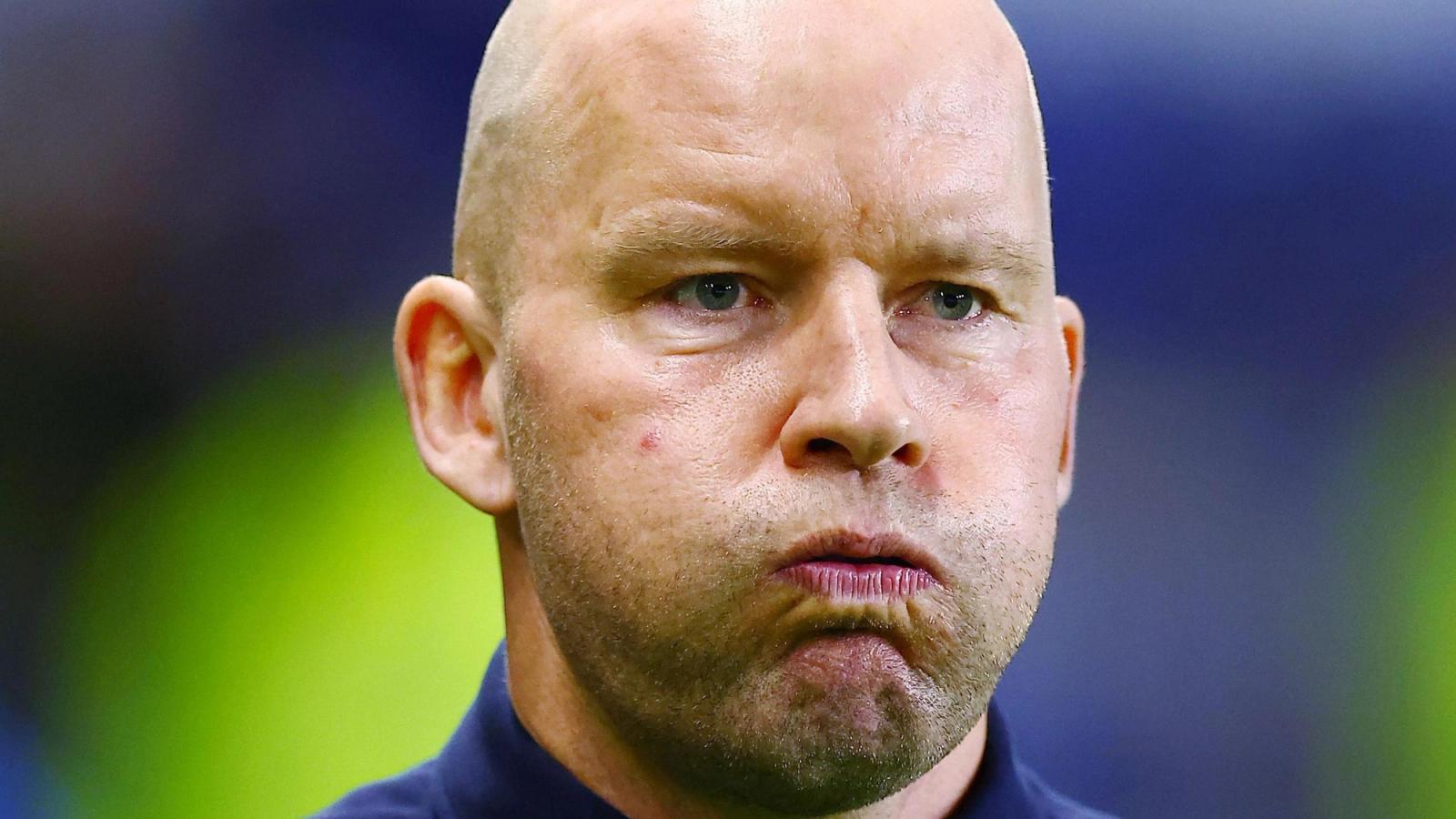
Seventh in League One, unbeaten in eight across all competitions, and with games in hand on the teams above us. On paper that isn't a crisis. Ask around Hillsborough this week, though, and you'd think it was. The fanbase is split on Henrik Pedersen, and after Saturday's 2–2 at Huddersfield the split has never been clearer.
I'll say where I stand on the table first: I'd take points over games in hand any day of the week. Games in hand are only points you might win, and on current form we can't assume we'll win them. So the question isn't whether we're in trouble. It's whether the unease about the man in charge is an overreaction or something we should take seriously.
Huddersfield: a point, not a performance
The result looks fine. The 90 minutes before it didn't. For the first hour Huddersfield were much the better side. We were sloppy at the back, gifted them the opener with an individual error, and conceded a second after their movement pulled us apart. We didn't register a shot until the 50th minute, and it was largely down to Joe Lumley that the game was still alive at 2–0.
Then it changed. A late own goal gave us a foothold, Huddersfield dropped deeper and started to lose their nerve, and Liam Cooper put his head where it hurts to win the penalty that Jamal Lowe tucked away. The away end went home happy. Most of us also went home knowing we'd got away with one.
And it's becoming a pattern. We're outperforming our expected goals, and penalties and own goals are doing a lot of the work rather than chances made from open play. The unbeaten run is real, but performances against the likes of Wigan and Stockport haven't been convincing. Too often our best football comes when we're behind and desperate, not when we're following a plan.
A side of Pedersen we haven't seen
What stood out on Saturday was Pedersen himself. Last season, nobody judged him on results. With 15 senior players, unpaid wages, administration and an 18-point deduction, every point was a bonus. He kept the club functioning when almost everything around it had stopped, and he rightly got credit for it.
After Huddersfield we heard a different manager. He said the team had spent two and a half weeks of the international break working on playing forward, with more runs and more dynamism, and then played too slow and too much sideways and backwards in the first half. Only at 2–0 down, he said, with "nothing to lose", did his side start to play football. He was proud of the comeback, but he was clear about the standard: "we need this 95 minutes."
It's the first time he has publicly drawn a line between what he asks for and what he's getting. James Mappin on the Owls Extra podcast read it as a manager hinting that his players aren't following instructions, which raises the obvious question: is the dressing room drifting, or do the players not trust the plan or lack the ability to carry it out? I don't see a dressing room that's gone. Players who have downed tools don't come back from two goals down away from home. What I see is a squad that still isn't comfortable with what's being asked of it.
Personally, I think the edge is needed. Wednesday can't have the same manager this season that it had last season. Last season was about survival, and being patient and protective was right. This season there's an ambitious squad, a new ownership and real expectation. If the first half at Huddersfield isn't acceptable, I'd rather he said so than pretended otherwise. Still, a manager who criticises his team in public has to show he can fix it.
The case against him
The problem isn't only results. It's identity. I can't point to a clear tactical step forward since pre-season. Our build-up is slow and predictable, and Harry Gray and Kieran Morrison keep picking the ball up with their backs to goal instead of being isolated one-on-one, where they're at their most dangerous. There's a gap between midfield and attack, players look locked into rigid positions, and there's no obvious plan B. Starting Gray and Morrison straight after international duty, with barely any time back with the group, is questionable but hard to fill those roles or adapt to a competitive shape without them.
The mood has turned remarkably fast. In early September the EFL put Pedersen on the shortlist for League One Manager of the Month for August, after two wins from his first three league games, including a 7–2 thrashing of Bromley, and a League Cup win over Bolton. By mid-September we were top of the table. Barely a month later, a poll on X cited on the pod had around 82% of roughly 1,300 respondents wanting him gone. A social media poll proves nothing on its own, but a swing that quick tells you something. Either those early weeks flattered us, or something has gone wrong since. Probably a bit of both.
The record that follows him
This is where the doubts go back further than this season. Before Wednesday, Pedersen's best spell as a head coach was at HB Køge in the Danish second tier, where he won about 39% of his games. At Vendsyssel it was nearer 37%. At Strømsgodset he won only around a quarter of his matches, and at Eintracht Braunschweig he lasted 14 games and won two. Across his whole career he has won fewer than three in ten.
His Wednesday numbers look worse still. But anyone who judges him on last season is ignoring what he was working with. Those figures tell us almost nothing about his ability. What they do show is a career that has never really got going. He's a well-respected coach who has spent most of his working life as an assistant, in academies or at modest clubs, without a long run of success as the man in charge.
That cuts both ways. You can see Wednesday as the latest chapter of a career that has never quite clicked. Or you can see it as the first time he has had a stable club, a proper squad and owners who back him. If he's ever going to show what he can do as a head coach, this is the job and the season where he has to do it.
Overreaction, or justified?
A bit of both. Calling for him to go while we're seventh and unbeaten in eight is premature, and it ignores how much goodwill he earned for this club when it was at its lowest. But the frustration isn't coming from nowhere. Performances are going backwards while results paper over the cracks, and "we only play well when we're losing" isn't a philosophy you can win a league with.
The new, sharper Pedersen is the right response, if he follows it up. The next run starts with AFC Wimbledon at Hillsborough on Saturday and Doncaster away the week after. Those games won't settle his future, but they should tell us whether Huddersfield was a manager reaching his limit or one finally demanding what this team is capable of. If the second-half version turns up from the first whistle, the doubts will go quickly. If it doesn't, they'll keep getting louder.
Whatever happens, a manager who kept the club alive deserves the chance to show he can also move it forward. That chance just won't last forever.