
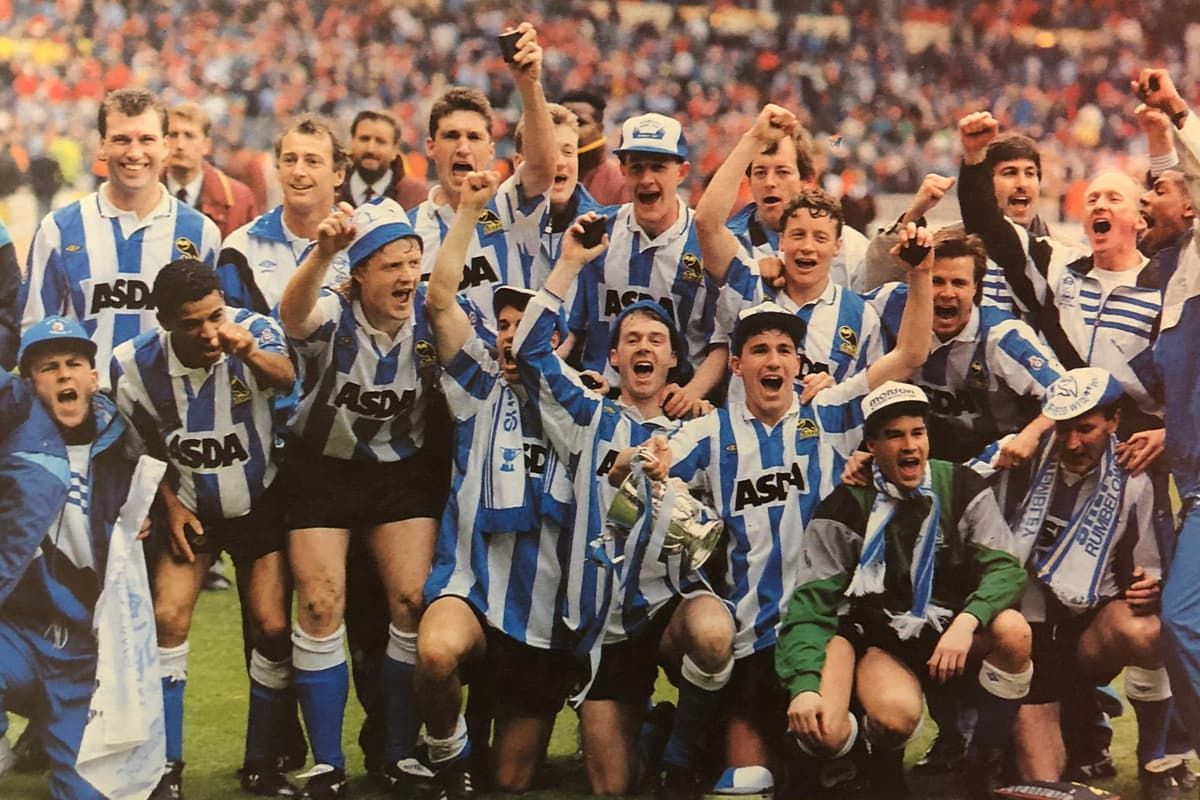
The 1990s are remembered as a decade that promised so much for the Owls, yet by the end of it the lights were going out on our top-flight status. It is only right that we cherish the fond memories of a time when Wednesday were competitive in the top flight. It is something we should be proud of, and the names of Sheridan, Hirst and Waddle will always be legendary. However, it could be argued that opportunities to push on were missed, with far-reaching consequences. So, let’s look at some of them and ask whether we should have done things differently.
Not signing Eric Cantona
This is the story of a player who became an icon at Manchester United and was key to their rise in the 1990s. Before he came to these shores, however, Cantona had a turbulent relationship with French football. He was an undoubted talent, but his temperament was a problem and a recurring theme of his time there. It led to him throwing in the towel and announcing his retirement at 25, before changing his mind.
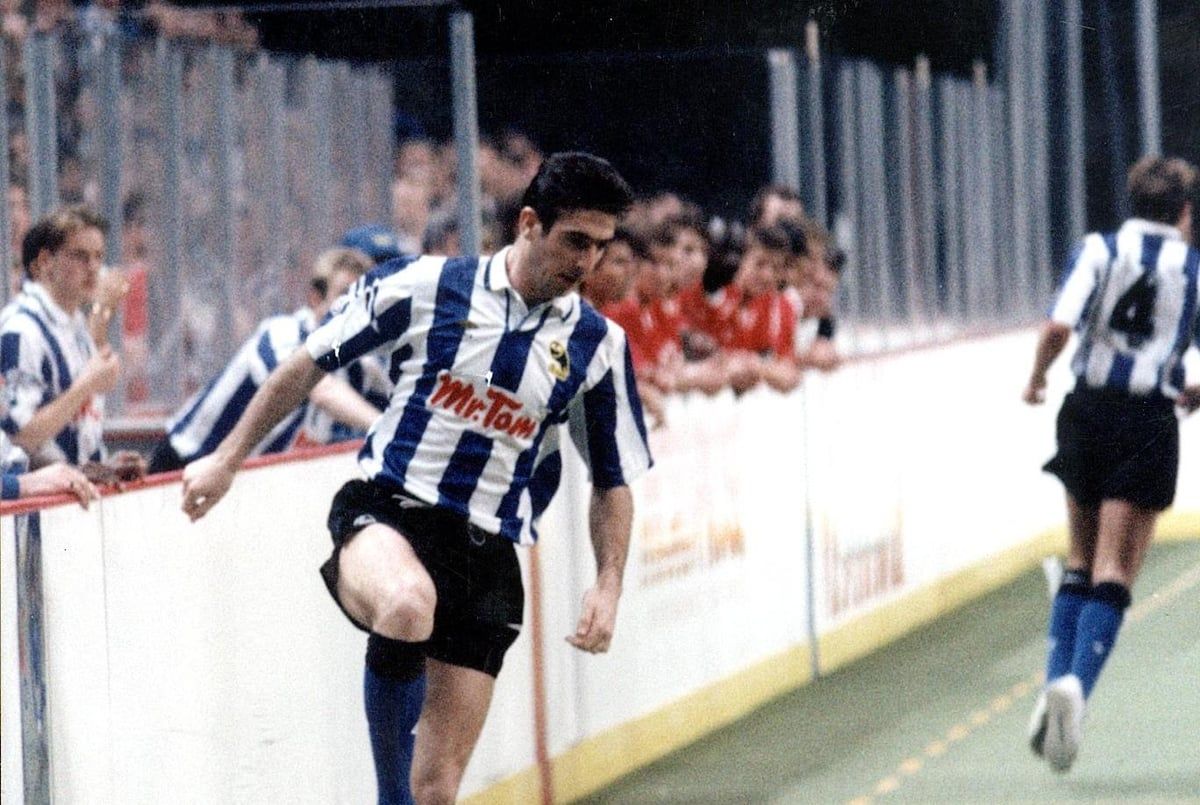
The man himself arrived at Wednesday looking to forge a career in England. In a real example of Wednesday luck, the weather meant all the pitches were frozen, so Cantona had to settle for playing in an indoor tournament, where he seemed to make an impression. Then come all the theories and denials as to why he ended up going up the M1 to Leeds United. It is claimed that we “wanted to see him play on grass”, which Cantona took great offence to. That is understandable: he had proved himself in his career and by no means underperformed in the indoor tournament. This sort of amateurish approach to player management is not that surprising in the case of Trevor Francis. He has denied this version of events and offered the unlikely claim that he was only doing it as a favour to the agent Dennis Roach.
The fact is this proved a sliding doors moment, as Leeds went on to become champions with Wednesday finishing third. There is no doubt he would have added something to a talented Wednesday side, and he could possibly have secured us a league title. It’s true that Leeds let him go soon after he helped them win it, but if we had had Cantona for a few seasons, this could have been a very different decade.
Disappointing transfer activity
To keep challenging for silverware, a team needs to bring in suitable replacements. If that does not happen, stagnation sets in, followed by decline. That is what happened to the team that brought us numerous Wembley trips in the first part of the decade. By the 1994/95 season, most of the top players in the squad were in their late 20s or early 30s, and the likes of Hirst had been plagued by injuries. Modern players can extend their careers, but such fitness levels were not common in the 90s.
If we look at the replacements, too many were a downgrade, and we never built another team that enjoyed sustained success. There were some talented players signed before the end of the decade, with Di Canio, Carbone and Walker the standouts. You can also add Stefanovic, Petrescu and Degryse, although none of these players had long careers at S6. The fact that our average league finish from 1994/95 to 1999/2000 was 14th reflects the decline from the first few seasons of the decade. It would be harsh to pick out individual players and compare them with stronger squads, and the blame for the decline does not lie with them alone.
Di Canio Red Card Push
The lack of a quality manager
I think it would be reasonable to argue that the only manager of above-average ability was Ron Atkinson. That is not to ignore the relegation under him in 1989/90, but he certainly made up for it. It was a typical Wednesday moment that he then departed after claiming he would stay. While this caused understandable anger among the fanbase, he was not irreplaceable. The board went for the player-manager option, which was always a flawed combination. Under Trevor Francis we did reach cup finals and finish seventh, and initially he made some good signings. The problem was that he struggled with man management, with players such as Paul Warhurst. Did I mention Eric Cantona?
He was then tasked with replacing an ageing squad, and the quality of signings went downhill. There seemed to be no plan for finding any sort of balance, and his final season ended in a 13th-place finish. The 7-1 home defeat to a Nottingham Forest side on the rise was a reminder of how we were starting to fall behind.
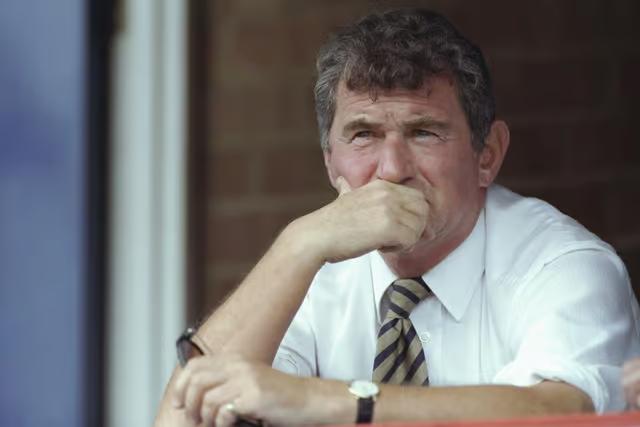
He was replaced by David Pleat, who did manage another seventh-place finish and had us top of the league. That was the last season in which Wednesday looked entertaining and had aspirations of European football. Unfortunately, he could not build on it, and when he was sacked we were nearer relegation than the top spots. There was some good recruitment, such as Emerson Thome, but no balanced team or squad existed.
The return of Big Ron helped stave off relegation, and the plan was then for a long-term vision. He was replaced by Danny Wilson, who was sadly massively out of his depth. I do wonder whether, had he been sacked after the 8-0 hammering at Newcastle, we could have rescued the season. Ah well, at least there was no permanent damage.
A lack of leadership and vision
One of the recurring issues of this decade was a lack of long-term vision. By the end of it, the good times had gone, with no clear idea of how to fix things. It was crucial to build a new squad under strong management, but the focus seemed to be elsewhere. It was an honour to host Euro 96, but it did take our eye off the ball. At that stage we needed to invest in a better manager and squad, and we failed to do so. By contrast, the forward-thinking vision of our new owners and their willingness to plan properly is exciting. It is a completely different game now, but the same principles still apply.
Dave Richards’s time at Wednesday is quite polarising, and he can point to the early 90s for his achievements. However, when leadership was needed, it was unfortunately lacking at times. No Wednesday fan would argue that Di Canio was right to push over Paul Alcock. However, it was a much less serious offence than Cantona’s at Crystal Palace, and Ferguson and Manchester United stood by him. Di Canio was hung out to dry by the club and ended up being sold to West Ham at a loss. If you are going to have talented, temperamental players, you need to be prepared for moments of madness.
Conclusion
It may seem strange to write a negative article about the 1990s, a decade associated with such fond memories. However, it is hard to ignore that there was a definite failure to build on them. You can factor in some bad luck and typical Wednesday moments (Hirst’s injuries, Di Canio and Alcock and so on), but as a club we did not respond correctly. We never replaced the squad of the early 1990s or implemented any successful long-term vision. Had we maintained solid top-flight status, we might have benefited from the further boom of the 2000s.
Typical Wednesday.